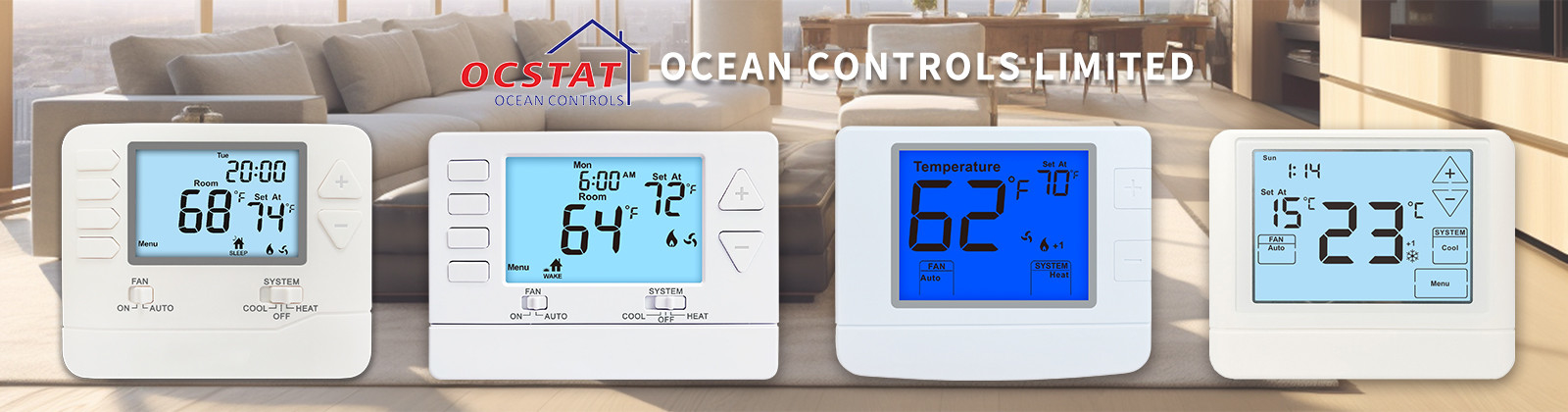
The Ultimate Guide to Programmable Thermostats
Everything You Need to Know About Choosing, Using, and Maximizing Your for Energy Savings and Comfort
In an era where energy efficiency and home comfort take center stage, the thermostat has evolved from a simple temperature dial to a smart, programmable device that transforms how we control our indoor environments. A programmable thermostat isn’t just a convenience—it’s a tool that helps you cut energy costs, reduce your carbon footprint, and tailor your home’s temperature to your daily routine. Whether you’re a homeowner looking to upgrade, a renter seeking temporary solutions, or a business owner aiming to optimize commercial spaces, this guide covers every aspect of programmable thermostats, from basic definitions to expert tips. We’ll also highlight how Ocean Controls Limited can help you find the perfect programmable thermostat for your needs, and you can reach out to us anytime at Bani@ocstat.com for personalized advice.
1. What Is a Programmable Thermostat, and How Does It Work?
At its core, a programmable thermostat is a device designed to automatically adjust your home or office’s temperature based on pre-set schedules. Unlike manual thermostats that require constant adjustment, programmable models let you set specific temperature targets for different times of the day, week, or even season—ensuring you’re never wasting energy heating or cooling an empty space, while still keeping things comfortable when you’re present.
1.1 The Core Mechanism of a Programmable Thermostat
A programmable thermostat operates on a (closed-loop) control system: it uses built-in sensors to monitor the current indoor temperature, compares it to your pre-set schedule, and sends signals to your HVAC (heating, ventilation, and air conditioning) system to adjust accordingly. This process eliminates the need for manual intervention, ensuring consistent temperature control and energy efficiency. For example, during the workday, you can program the thermostat to raise the temperature (in summer) or lower it (in winter) when no one is home, then adjust it back to a comfortable level before you return—saving energy without sacrificing comfort.
1.1.1 Key Components of a Programmable Thermostat
Every programmable thermostat includes three essential components: a temperature sensor to monitor indoor conditions, a scheduling interface (digital or touchscreen) to set your preferences, and a control module that communicates with your HVAC system. Modern models may also include Wi-Fi connectivity, energy monitoring features, and compatibility with smart home systems—all designed to make temperature control even more convenient and efficient.
1.1.1.1 Sensor Technology in Programmable Thermostats
The sensor is the "brain" of the programmable thermostat, as it ensures accurate temperature readings. Most models use either thermocouples or sensors, which can detect even small temperature changes (as little as ±0.3% accuracy in high-quality models) to ensure precise control. This accuracy is crucial for maintaining comfort and maximizing energy savings, as even a 1°F difference can impact your energy bills significantly.
1.1.1.1.1 How Sensors Impact Energy Efficiency
High-quality sensors in a programmable thermostat prevent unnecessary HVAC cycles. For example, if the sensor detects that the indoor temperature is already within your desired range, it won’t trigger the heating or cooling system—saving energy and reducing wear on your HVAC equipment. This is especially important for homes and businesses with variable occupancy patterns, where consistent temperature monitoring is key to avoiding waste.
1.1.1.1.1.1 Choosing a Thermostat with Reliable Sensors
When selecting a programmable thermostat, look for models with calibrated sensors and low temperature drift (≤0.02%/°C is ideal). Brands like Ocean Controls Limited offer programmable thermostats with high-precision sensors, ensuring accurate readings and consistent performance.
2. Types of Programmable Thermostats: Which One Is Right for You?
Programmable thermostats come in several types, each designed to fit different lifestyles and needs. Understanding the differences will help you choose a thermostat that aligns with your routine, HVAC system, and budget. Below are the most common types, along with insights from Ocean Controls Limited—an industry leader in thermostat design and manufacturing since 2012.
2.1 5-2 Day Programmable Thermostats
This is the most popular type of programmable thermostat, ideal for people with consistent weekday and weekend routines. You can set one schedule for Monday to Friday (e.g., lower temperature during work hours) and a different schedule for Saturday and Sunday (e.g., higher temperature for lazy mornings). Ocean Controls Limited offers 5-2 day models with intuitive digital displays, making it easy to program and adjust your settings without confusion.
2.1.1 Best For: Busy Families and Working Professionals
If your weekdays follow a predictable schedule (e.g., leave for work at 8 AM, return at 6 PM), a 5-2 day programmable thermostat is perfect. It eliminates the need to adjust the thermostat every morning and evening, ensuring you save energy while you’re away and come home to a comfortable space. Ocean Controls Limited’s 5-2 day models are also compatible with most HVAC systems, including gas furnaces, heat pumps, and central air conditioning.
2.1.1.1 Installation Tips for 5-2 Day Thermostats
Installing a 5-2 day programmable thermostat is straightforward, but it’s important to turn off your HVAC system’s power before starting. Label your existing wires, mount the backplate securely, and follow the manufacturer’s instructions to connect the wires correctly. If you don’t have a C-wire (common wire) for power, Ocean Controls Limited can recommend battery-powered models or add-a-wire kits to ensure your thermostat works seamlessly. For assistance, contact Bani@ocstat.com—our team is happy to guide you through the installation process.
2.1.1.1.1 Troubleshooting Common Installation Issues
If your 5-2 day programmable thermostat isn’t working properly after installation, check the wire connections first—loose wires are a common issue. If the thermostat won’t power on, ensure the batteries are fresh (if battery-powered) or the C-wire is connected correctly. Ocean Controls Limited’s technical support team can help resolve any installation issues, and you can reach them at Bani@ocstat.com for prompt assistance.
2.1.1.1.1.1 Why Ocean Controls’ 5-2 Day Thermostats Stand Out
Ocean Controls Limited’s 5-2 day programmable thermostats are built with durability and usability in mind. They feature backlit displays for easy reading in low light, tamper-resistant settings for rental properties, and compatibility with CE, FCC, and CSA quality standards—ensuring reliable performance and safety. With a monthly production capacity of over 50,000 units, Ocean Controls can meet both residential and commercial demand for high-quality programmable thermostats.
3. The Benefits of Upgrading to a Programmable Thermostat
Upgrading to a programmable thermostat offers numerous benefits, from lower energy bills to improved comfort. Whether you’re replacing an old manual thermostat or upgrading from a basic programmable model, the advantages are clear—and Ocean Controls Limited’s programmable thermostats are designed to maximize these benefits for every user.
3.1 Lower Energy Bills
The biggest advantage of a programmable thermostat is energy savings. According to Consumer Reports, programmable thermostats can reduce energy bills by about $180 per year when used correctly. By programming your thermostat to adjust temperatures during unoccupied hours (e.g., lowering the heat by 7-10°F for 8 hours a day in winter), you can cut heating and cooling costs by 10-15% annually. Ocean Controls Limited’s programmable thermostats are optimized for energy efficiency, with features like adaptive recovery (preheating or precooling to hit your target temperature at the right time) and energy monitoring to help you track your savings.
3.1.1 How Ocean Controls Enhances Energy Savings
Ocean Controls Limited’s programmable thermostats are engineered with energy efficiency in mind. Their models include PID (Proportional-Integral-Derivative) control and self-tuning functions, which adjust heating and cooling output based on temperature differences—avoiding energy waste from overheating or overcooling. Additionally, their Wi-Fi-enabled models let you adjust your thermostat remotely via a mobile app, so you can make changes if your schedule changes unexpectedly (e.g., working from home for the day) and avoid unnecessary energy use. To learn more about their energy-efficient models, email Bani@ocstat.com.
3.1.1.1 Real-World Energy Savings Examples
A small business in Florida, USA, upgraded to Ocean Controls Limited’s programmable thermostats and saw a 12% reduction in monthly energy bills within the first three months. By programming the thermostat to lower the temperature during non-business hours and adjust gradually before opening, the business saved over $2,000 annually. Residential users have reported similar savings—with many seeing a 10-15% drop in heating and cooling costs after switching to Ocean Controls’ programmable thermostats.
3.1.1.1.1 Maximizing Savings with Proper Programming
To get the most energy savings from your programmable thermostat, follow these tips: set the temperature 7-10°F lower (winter) or higher (summer) during unoccupied hours, avoid frequent manual overrides, and use the vacation mode when you’re away for more than a day. Ocean Controls Limited’s customer support team can help you create a personalized programming schedule tailored to your routine—just reach out to Bani@ocstat.com for guidance.
3.1.1.1.1.1 Avoiding Common Energy-Saving Mistakes
One common mistake users make is setting the thermostat to extreme temperatures (e.g., 50°F in winter) to save energy faster. This actually wastes energy, as your HVAC system will have to work harder to heat the space back up. Instead, stick to 7-10°F adjustments—this is the optimal range for energy savings without sacrificing comfort. Ocean Controls’ programmable thermostats include temperature limits to prevent extreme settings, helping you avoid this mistake and maximize savings.
4. How to Choose the Perfect Programmable Thermostat for Your Space
With so many programmable thermostats on the market, choosing the right one can be overwhelming. The key is to consider your HVAC system, lifestyle, and budget—and Ocean Controls Limited offers a wide range of models to fit every need. Below is a step-by-step guide to help you make the right choice, and you can always contact Bani@ocstat.com for personalized recommendations.
4.1 Consider Your HVAC System Compatibility
Not all programmable thermostats work with all HVAC systems. Before buying, check if the thermostat is compatible with your heating and cooling system (e.g., single-stage vs. multi-stage, heat pump vs. gas furnace, line-voltage vs. low-voltage). Ocean Controls Limited’s thermostats are compatible with most HVAC systems, including conventional single-stage systems, heat pumps, and underfloor heating. Their RT28U model, for example, accepts a wide range of sensors (Pt100, thermocouples, voltage/current inputs) and works with both heating and cooling systems—making it a versatile choice for any space.
4.1.1 Compatibility Checklist for Your HVAC System
To ensure compatibility, check the following: your HVAC system’s voltage (low-voltage vs. line-voltage), the number of stages (single vs. multi-stage), and whether it uses a heat pump (requires a thermostat with auxiliary heat settings). Ocean Controls Limited’s product datasheets (available for download on their website) include detailed compatibility information, and their team can verify compatibility for you—just send an email to Bani@ocstat.com with details about your HVAC system.
4.1.1.1 Why Compatibility Matters
Using a programmable thermostat that’s incompatible with your HVAC system can lead to poor performance, increased energy bills, and even damage to your equipment. For example, a thermostat designed for a single-stage system won’t work properly with a multi-stage heat pump, leading to inefficient heating and cooling. Ocean Controls Limited’s thermostats are engineered to work with a wide range of systems, ensuring optimal performance and longevity for both your thermostat and HVAC equipment.
4.1.1.1.1 Ocean Controls’ Compatibility Support
If you’re unsure about your HVAC system’s compatibility with a programmable thermostat, Ocean Controls Limited’s technical team is here to help. They can review your system details and recommend the perfect thermostat for your needs. Whether you have a residential HVAC system or a commercial setup, their team has over 10 years of experience in thermostat design and can provide expert guidance. Contact Bani@ocstat.com to get started.
4.1.1.1.1.1 Popular Compatible Models from Ocean Controls
Ocean Controls Limited offers several popular programmable thermostats that work with most HVAC systems: the STN75, the STN855W (universal analog input, two relay outputs), and their touchscreen Wi-Fi models (compatible with smart home systems). All these models are designed to be compatible with CE, FCC, and CSA standards, ensuring safety and reliability in any space. To learn more about these models, email Bani@ocstat.com.
5. Frequently Asked Questions (FAQs) About Programmable Thermostats
We’ve compiled the most common questions about programmable thermostats to help you make informed decisions. If you have additional questions, feel free to contact Ocean Controls Limited at Bani@ocstat.com—our team is always happy to help.
5.1 Do Programmable Thermostats Really Save Energy?
Yes—when used correctly, programmable thermostats can save 10-15% on heating and cooling bills. However, some studies have shown that poor usability can lead to little or no savings in residential settings. That’s why Ocean Controls Limited designs their thermostats with intuitive interfaces, making it easy to program and maintain your schedule. Their models also include features like energy monitoring and reminders to help you stay on track with your energy-saving goals. With proper programming, you can expect to see significant savings within a few months of installation.
5.1.1 Why Do Some Users See No Savings?
Users often see no savings if they frequently override their programmablethermostat’s schedule or set extreme temperature adjustments. To avoid this, stick to your pre-set schedule and use the thermostat’s temporary hold feature only when necessary. Ocean Controls Limited’s thermostats include lockout settings to prevent accidental overrides, and their customer support team can help you create a schedule that fits your routine—ensuring you maximize savings. Contact Bani@ocstat.com for tips on programming your thermostat for optimal energy savings.
5.1.1.1 How to Measure Your Energy Savings
To measure your energy savings, compare your monthly energy bills before and after installing your programmable thermostat. Most modern programmable thermostats (including Ocean Controls’ models) include energy monitoring features that track your usage and provide reports, making it easy to see how much you’re saving. You can also use online calculators to estimate your potential savings based on your location, HVAC system, and programming schedule. For personalized savings estimates, email Bani@ocstat.com with details about your home or business.
5.1.1.1.1 Long-Term Savings Benefits
Over time, the energy savings from a programmablethermostat can add up significantly. For example, a homeowner who saves $180 per year will save $1,800 over 10 years—more than enough to cover the cost of the thermostat and installation. Ocean Controls Limited’s thermostats are built to last, with a durable design that ensures years of reliable performance. This means you’ll continue to save energy and money for years to come, making a programmable thermostat a smart long-term investment.
5.1.1.1.1.1 Ocean Controls’ Energy-Saving Guarantee
Ocean Controls Limited is committed to helping users save energy. Their programmable thermostats are backed by a quality guarantee, and if you don’t see a noticeable reduction in your energy bills within 3 months of proper installation and programming, their team will work with you to adjust your schedule or recommend a different model. Contact Bani@ocstat.com to learn more about their energy-saving guarantee and how they can help you maximize your savings.
6. Final Thoughts: Why a Programmable Thermostat Is a Smart Investment
A programmable thermostat is more than just a device—it’s an investment in comfort, energy efficiency, and convenience. By automating your temperature control, you’ll save time, money, and energy, while creating a more comfortable indoor environment for you, your family, or your employees. Ocean Controls Limited has over 20 years of experience designing and manufacturing high-quality programmable thermostats, and their team is dedicated to helping you find the perfect thermostat for your needs. Whether you’re looking for a basic 5-2 day model or a advanced Wi-Fi-enabled thermostat, they have you covered.
If you have any questions about programmable thermostats, need help choosing the right model, or want to learn more about Ocean Controls Limited’s products and services, don’t hesitate to reach out. You can contact Bani at Bani@ocstat.com for personalized advice, technical support, or a quote. Upgrade your thermostat today and start enjoying the benefits of a more efficient, comfortable space.