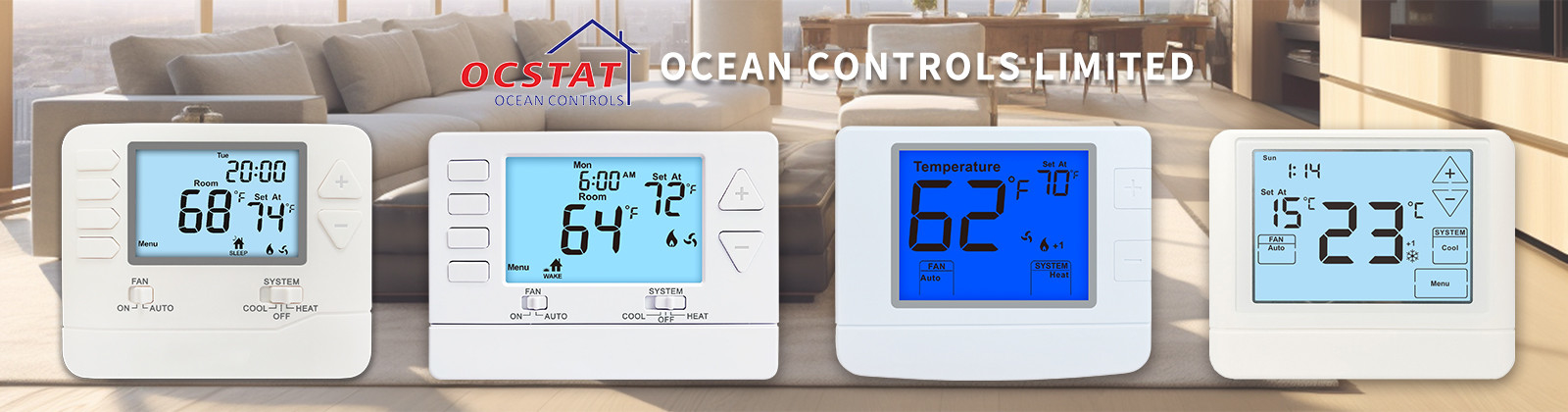
The Science of Comfort: How Central Air Thermostats Revolutionize Indoor Living
ThermostatSubtitle: The Core Technology of and Its Role in Shaping a Comfortable, Energy-Efficient Indoor Environment
Introduction: The Unsung Hero of Indoor Comfort
We spend over 90% of our time indoors, according to the Environmental Protection Agency, making indoor comfort a cornerstone of quality life. Behind every comfortable home, office, or commercial space lies a crucial device that operates silently yet efficiently—the thermostat. For central air conditioning systems, the central airthermostat is not just a temperature-adjusting tool; it is the "brain" that connects human comfort needs with HVAC system operations. This blog will delve into the science behind central air thermostats, explore how they have transformed indoor living experiences, and highlight how manufacturers like Ocean Controls Limited are driving innovations in this field.
The Basic Science of Central Air Thermostats
At its core, a central air thermostat operates on a simple yet precise principle: sensing temperature changes and regulating HVAC system operations to maintain a preset temperature. To understand its magic, we need to break down its key components and working mechanism.
Key Components of a Central Air Thermostat
A high-performance central air thermostat consists of three essential parts that work in synergy:
1. Temperature Sensor
The "eyes" of the thermostat, temperature sensors detect real-time indoor temperature and convert thermal changes into electrical signals. Modern thermostats often use NTC sensors, which offer high sensitivity and precision, ensuring accurate temperature data collection for subsequent control decisions .
2. Controller
As the "brain," the controller—typically a microprocessor—receives signals from the sensor, compares the actual temperature with the user's preset value, and calculates the required adjustments. Advanced controllers in digital thermostats can execute complex algorithms, enabling functions like multi-period scheduling and temperature compensation .
3. Actuator
The "hands and feet" of the thermostat, actuators (such as electric valves or dampers) adjust the HVAC system's operation based on controller commands. For example, if the room is too hot, the actuator increases refrigerant flow to enhance cooling; if too cold, it boosts heating output .
The Working Cycle: From Sensing to Regulation
The operation of a central air thermostat follows a closed-loop cycle: first, the sensor detects indoor temperature and transmits data to the controller; second, the controller analyzes the temperature difference and issues adjustment commands; third, the actuator modifies the HVAC system's output; finally, the sensor re-detects the adjusted temperature, and the cycle repeats. This continuous feedback ensures stable and precise temperature control .
How Central Air Thermostats Revolutionize Indoor Living
From basic manual models to smart, connected devices, central air thermostats have evolved dramatically, bringing three major revolutions to indoor living.
1. Precision Comfort: Beyond One-Size-Fits-All Temperature
Traditional manual thermostats lacked precision and could only provide rough temperature control. Modern digitalthermostats, however, offer precise control within ±0.5℃, eliminating temperature fluctuations. For instance, Ocean Controls Limited’s programmable central air thermostat allows users to set different temperatures for morning, noon, evening, and night, adapting to diverse activity needs—such as a warmer temperature for waking up and a cooler one for sleeping .
2. Energy Efficiency: Reducing Waste with Intelligent Regulation
Heating and cooling account for nearly 50% of a home’s energy consumption. Central air thermostats play a pivotal role in energy conservation. Smart thermostats can learn user habits, automatically adjust temperatures when the room is unoccupied, and provide energy consumption reports. Studies show that advanced thermostats can reduce HVAC energy use by up to 8% 6. Ocean Controls Limited’s central air thermostat supports centralized control, enabling differential temperature settings for different rooms in commercial buildings, further minimizing energy waste .
3. Smart Living: Remote Control and Scene Integration
The rise of smart homes has made connectedthermostats a staple. Users can control their central air thermostat via smartphone apps, adjusting temperatures before arriving home or troubleshooting remotely. Some models integrate with smart home ecosystems, linking with lighting and curtains to create personalized comfort scenes. For example, when you activate the "movie night" mode, the thermostat automatically lowers the temperature for a more immersive experience .
The Evolution of Central Air Thermostats: From Basic to Intelligent
The development of central airthermostats reflects the pursuit of better indoor comfort. Let’s trace its evolutionary journey through different generations.
1. Manual Thermostats: The Foundation of Temperature Control
Early manual thermostats (such as three-speed switches) required manual adjustment of fan speed to control temperature. They were simple and low-cost but lacked precision and energy-saving features, gradually becoming obsolete .
2. Digital Non-Programmable Thermostats: Precision Meets Simplicity
Digital non-programmable thermostats introduced LCD displays and microprocessors, enabling precise temperature setting and real-time display. They offered better control than manual models but still required manual adjustments for temperature changes .
3. Programmable Thermostats: Customization for Schedules
Programmable thermostats allowed users to set temperature schedules for different times of the day or week. For example, setting a lower temperature during work hours and a warmer one before returning home, balancing comfort and energy savings .
4. Smart Thermostats: The Future of Comfort Control
Smart thermostats represent the latest advancement, integrating Wi-Fi, sensors, and AI technology. They offer remote control, occupancy detection, and energy usage analysis. Ocean Controls Limited, a leading manufacturer of HVAC thermostats, has launched a series of smart central air thermostats with color touch screens and deep customization options, catering to both residential and commercial needs .
Ocean Controls Limited: Driving Innovation in Thermostat Technology
In the competitive thermostat market, Ocean Controls Limited stands out with its commitment to quality and innovation. With over a decade of experience, the company specializes in developing and manufacturing a wide range of central air thermostats, including non-programmable digital models, programmable versions, and smart connected devices .
Product Advantages of Ocean Controls Limited
1. High Precision and Reliability
The company’s thermostats use high-quality NTC sensors and durable actuators, ensuring stable performance and precise temperature control even in harsh environments .
2. Diverse Product Portfolio
Ocean Controls Limited offers thermostats for various applications, from residential central air systems to commercial HVAC units. Their product line includes 24V programmable models, wireless remote-controlled versions, and floor heating thermostats, meeting diverse customer needs .
3. Focus on Energy Efficiency
Aligning with global energy-saving trends, the company’s smart thermostats incorporate advanced algorithms to minimize energy consumption. Their thermostats support centralized control, making them ideal for large buildings like hotels and offices3.
4. Customization Capabilities
Ocean Controls Limited provides OEM/ODM services, offering in-depth software and hardware customization for different HVAC systems and regional requirements. This flexibility has made it a trusted partner for businesses worldwide .
Practical Tips for Choosing and Using Central Air Thermostats
To maximize the benefits of your central air thermostat, here are some expert tips:
1. Choose the Right Type
For homeowners with regular schedules, programmable thermostats are a cost-effective choice. For those seeking convenience and energy savings, smart thermostats are worth the investment. Commercial users should opt for models for centralized control .
2. Install It Correctly
Install the thermostat in a central location away from direct sunlight, drafty areas, or heat-emitting appliances. This ensures accurate temperature sensing.
3. Program It Wisely
Set temperature differences of 5-8℃ between occupied and unoccupied periods to save energy without sacrificing comfort. Use the energy report feature on smart thermostats to optimize settings .
4. Regular Maintenance
Clean the thermostat’s sensor and display regularly to ensure accurate operation. Check for loose wires annually and replace batteries (if applicable) to avoid unexpected shutdowns .
Conclusion: The Future of Comfort Is Smart and Efficient
Central air thermostats have come a long way from simple manual devices to intelligent control systems, revolutionizing indoor living by balancing comfort, energy efficiency, and convenience. As technology advances, we can expect even more innovative features—such as AI-powered predictive control and seamless integration with smart city systems.
Ocean Controls Limited continues to lead the way in thermostat innovation, providing reliable, efficient solutions for homes and businesses worldwide. Whether you’re upgrading your home’s HVAC system or equipping a commercial building, choosing the right central air thermostat is key to unlocking a more comfortable and sustainable indoor environment.